Image 1 of 1
Writing Like an Ecosystem (in person, Kingston)
CA$95.00
The biotic world is characterized by fluid, porous, interconnected, interspecies systems. How might our writing benefit from thinking like/with/in conversation with ecological processes? How might our writing be less static, less linear? In this workshop, artists and writers of all experience levels are invited to experiment. We’ll wade into the porosity of language, the fluid boundaries between image and text. We’ll explore how different mediums speak to and through each other. Guided by a range of prompts, we’ll experiment, converse, and share our experimentations.
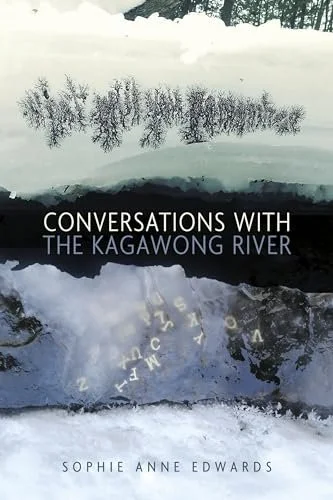
“Subversive, risk-taking, restlessly immersive, Sophie Anne Edwards’ Conversations with the Kagawong River presents an ecological practice of radical site-specific engagement. Driven by a desire to “fill language with the body,” and informed by local Anishinaabe and settler history, she brings to these encounters with the river an ontological urgency and fierce energy. Here is a bold category-crossing work to cherish and also heed.” Don McKay, poet, 2x Governor General winner
“The river speaks through and with Sophie Anne Edwards in Conversations with the Kagawong River. In this field study combining historiographic research, local storytelling, and gorgeous poetic experimentation, we are called to immerse ourselves and listen. Flow with the current, dig your fingers in the silt, heed the warning of its song.” Kate Sikloski, author of Selvege, co-publisher Gap Riot Press
Sophie Anne Edwards’ was the inaugural Geopoet in Residence at Queen’s U with the Department of Geography and Planning. Her environmental poetry – visual poems, video poems and text-based work – has been published by Gap Riot, Blasted Tree, and Jack Pine presses, as well as by a range of literary magazines across Canada. Her full-length book of hybrid/experimental environmental poetry — Conversations with the Kagawong River (Talonbooks) was a CBC and Quill & Quire most anticipated read. A Mouth of Vowels, an experimental novel (1366/Guernica Editions) was longlisted for Omnidawn’s 1st/2nd book prize. She has also been longlisted for a CBC Poetry Prize, a CBC Nonfiction Prize, and shortlisted for Arc Magazine Poem of the Year. As the founding AD/ED of 4elements Living Arts she curated, designed and led dozens of environmental arts projects, including Elemental Festival and The Connections Trail (which won an Ontario Lieutenant Governor Award for Cultural Landscape Heritage Preservation). She has also written/edited four non-fiction books about environmental, creative and community-based engagement and research. A PhD candidate in Geography, she earned a Certificate in Creative Writing from Humber College and has attended writing residencies with the Banff Centre for the Arts, Sage Hill, and the Al Purdy A-Frame.
Image credit: Image by rawpixel.com on Freepik with my alphabet riffs.
Chamomile (anthemis nobilis) illustration from medical botany (1836)
The biotic world is characterized by fluid, porous, interconnected, interspecies systems. How might our writing benefit from thinking like/with/in conversation with ecological processes? How might our writing be less static, less linear? In this workshop, artists and writers of all experience levels are invited to experiment. We’ll wade into the porosity of language, the fluid boundaries between image and text. We’ll explore how different mediums speak to and through each other. Guided by a range of prompts, we’ll experiment, converse, and share our experimentations.
“Subversive, risk-taking, restlessly immersive, Sophie Anne Edwards’ Conversations with the Kagawong River presents an ecological practice of radical site-specific engagement. Driven by a desire to “fill language with the body,” and informed by local Anishinaabe and settler history, she brings to these encounters with the river an ontological urgency and fierce energy. Here is a bold category-crossing work to cherish and also heed.” Don McKay, poet, 2x Governor General winner
“The river speaks through and with Sophie Anne Edwards in Conversations with the Kagawong River. In this field study combining historiographic research, local storytelling, and gorgeous poetic experimentation, we are called to immerse ourselves and listen. Flow with the current, dig your fingers in the silt, heed the warning of its song.” Kate Sikloski, author of Selvege, co-publisher Gap Riot Press
Sophie Anne Edwards’ was the inaugural Geopoet in Residence at Queen’s U with the Department of Geography and Planning. Her environmental poetry – visual poems, video poems and text-based work – has been published by Gap Riot, Blasted Tree, and Jack Pine presses, as well as by a range of literary magazines across Canada. Her full-length book of hybrid/experimental environmental poetry — Conversations with the Kagawong River (Talonbooks) was a CBC and Quill & Quire most anticipated read. A Mouth of Vowels, an experimental novel (1366/Guernica Editions) was longlisted for Omnidawn’s 1st/2nd book prize. She has also been longlisted for a CBC Poetry Prize, a CBC Nonfiction Prize, and shortlisted for Arc Magazine Poem of the Year. As the founding AD/ED of 4elements Living Arts she curated, designed and led dozens of environmental arts projects, including Elemental Festival and The Connections Trail (which won an Ontario Lieutenant Governor Award for Cultural Landscape Heritage Preservation). She has also written/edited four non-fiction books about environmental, creative and community-based engagement and research. A PhD candidate in Geography, she earned a Certificate in Creative Writing from Humber College and has attended writing residencies with the Banff Centre for the Arts, Sage Hill, and the Al Purdy A-Frame.
Image credit: Image by rawpixel.com on Freepik with my alphabet riffs.
Chamomile (anthemis nobilis) illustration from medical botany (1836)